In the novel Waiting for the Barbarians, the story's narrator, the Magistrate, provides great insight in to the tale of a barbarian girl, victimized by the immoral acts committed by Colonel Joll. Through the tale of this girl, and having seen the very acts committed before him, the Magistrate comes to many significant realizations.
One crucial realization that the Magistrates comes to is that the Empire is in fact the enemy. Caught between the frontier town and the way of the barbarians, and the forces of Colonel Joll (which represent the Empire), the Magistrate becomes aware of the fact that the Empire, while it makes the barbarians out to look like savage beasts, is in fact the enemy, behaving in a cruel and inhumane manner towards its less-civilized counterpart. In an argument with the Colonel the Magistrate states, "'those pitiable prisoners you brought in-are they the enemy I must fear? Is that what you say? You are the enemy, Colonel! ... You are the enemy, you have made the war, and you have given them all the martyrs they need..."' Later on in the novel, the Magistrate declares, "'the crime that is latent in us we must inflict on ourselves.' I say. I nod and nod, driving the message home. 'Not on others,' I say: I repeat the words, pointing at my chest, pointing at his.
The Magistrate wants no part of the crimes that Colonel Joll and the Empire commit. He states that he could never live with himself if he committed the crimes that the forces of the Empire did. In one instance, the Magistrate asks Mandel, as they both stand outside a gate which detains a barbarian inside, "'Forgive me if the question seems impudent, but I would like to ask: How do you find it possible to eat afterwards, after you have been ... working with people? That is a question I have always asked myself about executioners and other such people.'"
Finally, the Magistrate comes to a critical realization when he states, "I was the lie that Empire tells itself when times are easy, he the truth that Empire tells when harsh winds blow. Two sides of imperial rule, no more, no less."
Tuesday, March 15, 2011

Wednesday, March 9, 2011
Untried Detentions During the Apartheid Era
The article that I found talked about the crimes committed by the government in South Africa during the Apartheid Era. One such crime noted was the General Law Amendment Act, in which the police force were given the ability to arrest anyone they deemed suspicious (reading this reminded me of the laws that were passed in our own state of Arizona). Also, journalist Ruth first, author of 117 Days, was mentioned. In her book she talks about the repeatable process in which the police force would arrest people, detain them, then set them free, only to re-arrest them (as soon as they exited the police station). The article stated that, "the primary aim of the government was to extract as much information from detainees as possible."
Link to Source - "Overcoming Apartheid"

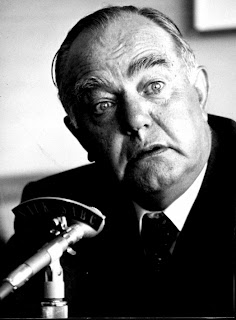
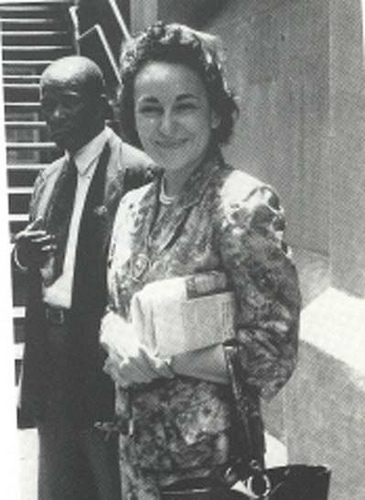
(Pictured Above: Ruth First, journalist and author of 117 Days)

(B. J. Vorster, Prime Minister of South Africa)
Tuesday, February 15, 2011
Darcy: A Misunderstood Man In His Own Right
Sue Birtwhistle and Susie Conklin interviewed Firth to find out how he was able to portray Jane Austen’s character of Darcy in such a clear light. Birtwhistle and Conklin ask Firth questions ranging from how he tried to communicate the dynamic of Darcy’s character, to how he felt about Darcy in certain instances, to how certain scenes affected Firth, and finally to how Firth approached certain scenes.
Colin Firth’s thesis about Darcy is that Darcy is truly an unpredictable character. He has a lot going on inside, but reads differently on the outside.
For example, in one part of the interview Firth states, “nobody ever knows quite what Darcy’s thinking.” Furthermore, when referring to Darcy’s love of Elizabeth, Firth says that, “Darcy’s emotional and doesn’t want her to know it, he hates her because he fancies her.” Thus, Darcy appears to be a misunderstood character, however this is his own fault, as, through his actions, he makes people confused as to what his true intentions are. Firth states, “so there are a million things going on inside him, yet he has to keep himself together and not show that he is in the slightest but ruffled.” Darcy masks his feelings and emotions, which ultimately lead to him being hurt because he is not true to others, but most of all he is not true to himself.
Firth goes on to explain that triggers that led to Darcy falling in love with Elizabeth. Firth states, “in Darcy’s case, very little had ever attracted his attention…the first trigger is the moment when Elizabeth rejects him so impertinently…Darcy was used to looking at other people like that, but was not used to being looked at like that himself.” Psychologically, this concept is true. People often want what they can’t have. When Elizabeth rejects Darcy, the rejection only makes him want her more. This rejections leads to “bewilderment” and “curiosity” of Elizabeth; it is the first time that Darcy becomes “the pursuer rather than the pursued; it’s irresistible.” Firth says, “what starts off as intriguing becomes profoundly erotic for him.”
Firth further remarks that, “to begin with, it was a bit of sport. And then suddenly [Darcy] is feeling vulnerable and resents it bitterly…his behavior becomes rather confusing and paradoxical–he’s pursuing and rejecting Elizabeth at the same time…[For example,] he waits in places where he knows he’ll find her walking and then doesn’t speak to her…”
Furthermore, Darcy acts one way, but wants Elizabeth to think he’s the opposite. Firth proves this by stating as Darcy, “I’m going to put to you a proposal that may make me seem rash, irresponsible, and even, possibly, juvenile, but I don’t want you to believe I’m those things.” This truly shows that Darcy is a misunderstood and confused character.
One question in the interview was, “Does Lizzy’s rejection effect any real changes in Darcy, then?”
Firth responded, “Oh, yes…The fact that he writes her a letter explaining himself…is ostensibly a tremendously out-of-character thing to do…”
Finally, Firth declares, “[Darcy’s] real crime, I think, is silliness.”
I believe this is true. Everything that happened to Darcy is entirely his fault. He and Elizabeth play silly games with each other, and one or the other often end up getting hurt, but in the end, had Darcy not been the “conductor” of these games, they would never have existed. Yes I agree wholeheartedly with Firth. Darcy is a misunderstood character, and that is his own fault. The relationship that he shares with Elizabeth, although it is very unusual, makes sense given the causes of such a relationship. Darcy made things the way they were. Had he been honest and upright in the first place with her, things might have been different.
The knowledge that Firth stated about Darcy’s character helped me to understand the man. At first, I thought Darcy was arrogant and conceited, but after reading Firth’s thesis, I realize that Darcy is just a misunderstood man. He kind of puts on a show for everyone, and for Elizabeth especially. He comes off differently to people; however, being misunderstood is his own fault.
Therefore, I believe reading this interview truly helped me to get a further insight in to Darcy’s character as a whole.
Monday, December 6, 2010
"I Can't Make You Love Me."
In Shakespeare's Twelfth Night, the characters appear to view love as a curse. Most of the characters think of love as a force that affects its victims wildly. The characters in Twelfth Night suffer from being in love - whether it is the force itself or the fact that their lovers do not reciprocate the same feelings. Orsino even refers to his feelings of love as "fell and cruel hounds." Furthermore, Olivia refers to these feelings as a type of plague. In addition, at another point Orsino refers to love as an appetite that he must fulfill, however, he is unable to.
I do not wholeheartedly agree with Shakespeare’s view on love. I see love as a feeling that two people share together – a feeling that grows, or, in some cases, a connection that naturally exists. I do not think it is a curse – after all, without love, life is like the seasons with no summer. I do, however, agree with the view of Shakespeare’s characters when they state that love is a force that affects its victims wildly. Love is unpredictable – but isn’t that the beauty of it? I suppose that unreciprocated love could serve as a type of plague haunting its victims. This view could also apply to Orsino’s appetite that he is unable to fulfill.
I believe that all of Shakespeare’s views of love that he presents in Twelfth Night are all plausible ideas; however, I feel that at times they intersect with my own views. For the sake of drama, Shakespeare’s characters do not appear to accept the reality that their love will not be fulfilled. Rather, the characters attempt to control what is happening. They appear to attempt to change each other’s feelings – an act that I feel is impossible.
I believe that love is divine – at least true love. It is a feeling that is naturally already there. Love is when two forces combine to create one unique force.
In Twelfth Night, the characters attempt to make these forces combine. I believe that is impossible.
However, I do agree that at times love can act as a plague. It is undoubtedly at times, as Orsino states, an appetite that cannot be fulfilled. Therefore, I do agree with these aspects of love that are presented in Twelfth Night. Love can be cruel, but I think it is cruel for a reason. There’s a sense of glory that comes with love.
Therefore, while I do not agree wholeheartedly with the ideas of love presented in Twelfth Night, I do agree with some aspects. I don’t agree with Shakespeare’s characters thinking that they can force love upon one another. In the words of Bonnie Raitt, “I can’t make you love me.” Some things in life are not able to be controlled. Just like the seasons of the year, love comes and goes. It affects its victims wildly, happening at times when least expected. Love does act as an appetite that can never be fulfilled, however, once it is, its true power is realized.
Sunday, November 14, 2010
"Mama, what is my destiny?"
For this word search project, I have chosen to define and research the word destiny. Why would I choose this word? Because I feel that everyone has a certain destiny, and I am fascinated by this concept. What is my destiny? What is yours?
This word means so much to me. It is essentially what life is about. Destiny defines our purpose.
I know that this is a very significant word. It is defined as, "the events that will necessarily happen to a particular person or thing in the future." To me, destiny refers to many things. Pertaining to history, it can refer to manifest destiny and our mission as a nation. It can refer to operas and lyrics to popular music. Or, destiny can refer to one of the most memorable movie lines in cinematic history, "Luke, it is your destiny."
I have chosen to explore this word because at this stage of my life, I am unsure what my destiny. There are many forks in the road, each bringing about its own sorrows and happiness, and here I sit, unsure of which way to go.
I admire the use of destiny in the film Slumdog Millionaire. The director, Danny Boyle, has had much commentary on the idea of destiny. Therefore, I look forward to study this word, and maybe in turn come upon some understanding as to what is written and what is not.
It seems that choosing this word might have been my destiny.
-Jeremy
This word means so much to me. It is essentially what life is about. Destiny defines our purpose.
I know that this is a very significant word. It is defined as, "the events that will necessarily happen to a particular person or thing in the future." To me, destiny refers to many things. Pertaining to history, it can refer to manifest destiny and our mission as a nation. It can refer to operas and lyrics to popular music. Or, destiny can refer to one of the most memorable movie lines in cinematic history, "Luke, it is your destiny."
I have chosen to explore this word because at this stage of my life, I am unsure what my destiny. There are many forks in the road, each bringing about its own sorrows and happiness, and here I sit, unsure of which way to go.
I admire the use of destiny in the film Slumdog Millionaire. The director, Danny Boyle, has had much commentary on the idea of destiny. Therefore, I look forward to study this word, and maybe in turn come upon some understanding as to what is written and what is not.
It seems that choosing this word might have been my destiny.
-Jeremy
Monday, November 1, 2010
An Hundred False Lapses More
“By this gaude have I wonne, yeer by yeer,
An hundred mark sith I was Pardoner.
I stonde lyk a clerk in my pulpet,
And whan the lewed peple is doun y-set,
I preche, so as ye han herd bifore,
And telle an hundred false Iapes more.”
These six lines from the Pardoner's Tale are very interesting. These lines illustrate exactly who the Pardoner is. Basically, the Pardoner is admitting to the fact that he makes a lot of money off of a scam. He declares that he tells "a hundred lies" to people and by doing this makes about a hundred gold coins a year. I find these lines interesting because although they show the deceptive nature of the Pardoner, they also demonstrate his honesty. He admits to the reader the basis of his scam. He tells the reader that he is fake.
Furthermore, the following lines are very interesting. They show the hypocritical nature of the Pardoner.
“But shortly myn entente I wol devyse;
I preche of no-thing but for coveityse.
Therfor my theme is yet, and ever was—
“Radix malorum est cupiditas.”
Thus can I preche agayn that same vyce
Which that I use, and that is avaryce.
But, though my-self be gilty in that sinne,
Yet can I maken other folk to twinne
From avaryce, and sore to repente.
But that is nat my principal entente.
I preche no-thing but for coveityse;
Of this matere it oughte y-nogh suffyse.”
Basically, the Pardoner admits to preaching out of sheer greed. He declares that the reason why he preaches about how the love of money is the root of all evil is so that he can preach about the "same sin that I myself indulge in."
This demonstrates a meaningful quality to the Pardoner. He almost has two personas. One that realizes the evils of society and works to point them out and fix them, and one that indulges in these evils.
But why is the Pardoner such a hypocritical character? Did Chaucer mean to write about such a conflicting character?
I think that the conflicting beliefs of the Pardoner make him the character he is. Without these conflicting ideas, the Pardoner would be an average, boring character. The reader becomes so interested in the Pardoner because he is so real, so human. His conflicting beliefs represent the contradictory nature of humans and the societies that govern.
Monday, October 18, 2010
Chapter 3, Project #2 - Ivanhoe
In Chapter 1 of Ivanhoe, by Sir Walter Scott, there is an excerpt in which two characters have a conversation. These two characters, Wamba and Gurth, are two extremely interesting characters. Wamba, a Jester dresses elaborately and contrasts greatly to Gurth, a swine-herd. In this excerpt, Wamba and Gurth have a conversation in which they discuss the differences between the names of animals and the names of the food they produce.
Wamba asks, "Why, how call you those grunting brutes running about on their four legs?" The herd repleies, "Swine, fool, swine." To which Wamba retorts, "And swine is good Saxon...but how call you the sow when she is flayed, and drawn, and quartered, and hung up by the heels, like a traitor?" The swine-herd answers, "Pork."
I thought this conversation was really funny and interesting because it shows how things change in meaning after they have been affected in a certain way. For example, the "grunting brutes" are called swine when they are alive, but once they have been "flayed" they are known as pork.
Wamba continues, "...so when the brute lives, and is in the charge of a Saxon slave, she goes by her Saxon name; but becomes a Norman, and is called pork, when she is carried to the Castle-hall to feast among the nobles." Furthermore, Wamba declares, "Nay, I can tell you more...there is old Alderman Ox continues to hold his Saxon epithet, while he is under the charge of serfs...but becomes a fiery French gallant when he arrives before the worshipful jaws that are destined to consume him....he is Saxon when he requires tendance, and takes a Norman name when he becomes matter of enjoyment."
I thought this was very interesting. This excerpt goes to show how that under certain circumstances, names take a significant role. What type of name is used and how it is used sets a certain degree in conversation. This can be linked to a more modern usage of the terms Mr. Mrs. and Ms. We have titles and in casual conversation with friends we often leave these titles out. However, in a more professional setting these surnames are required.
Language is a beautiful thing. :)
Wamba asks, "Why, how call you those grunting brutes running about on their four legs?" The herd repleies, "Swine, fool, swine." To which Wamba retorts, "And swine is good Saxon...but how call you the sow when she is flayed, and drawn, and quartered, and hung up by the heels, like a traitor?" The swine-herd answers, "Pork."
I thought this conversation was really funny and interesting because it shows how things change in meaning after they have been affected in a certain way. For example, the "grunting brutes" are called swine when they are alive, but once they have been "flayed" they are known as pork.
Wamba continues, "...so when the brute lives, and is in the charge of a Saxon slave, she goes by her Saxon name; but becomes a Norman, and is called pork, when she is carried to the Castle-hall to feast among the nobles." Furthermore, Wamba declares, "Nay, I can tell you more...there is old Alderman Ox continues to hold his Saxon epithet, while he is under the charge of serfs...but becomes a fiery French gallant when he arrives before the worshipful jaws that are destined to consume him....he is Saxon when he requires tendance, and takes a Norman name when he becomes matter of enjoyment."
I thought this was very interesting. This excerpt goes to show how that under certain circumstances, names take a significant role. What type of name is used and how it is used sets a certain degree in conversation. This can be linked to a more modern usage of the terms Mr. Mrs. and Ms. We have titles and in casual conversation with friends we often leave these titles out. However, in a more professional setting these surnames are required.
Language is a beautiful thing. :)
Subscribe to:
Comments (Atom)